Dan Evans says Henry Searle has the tools to progress, but adapting his game and learning from defeats will decide how quickly he climbs.
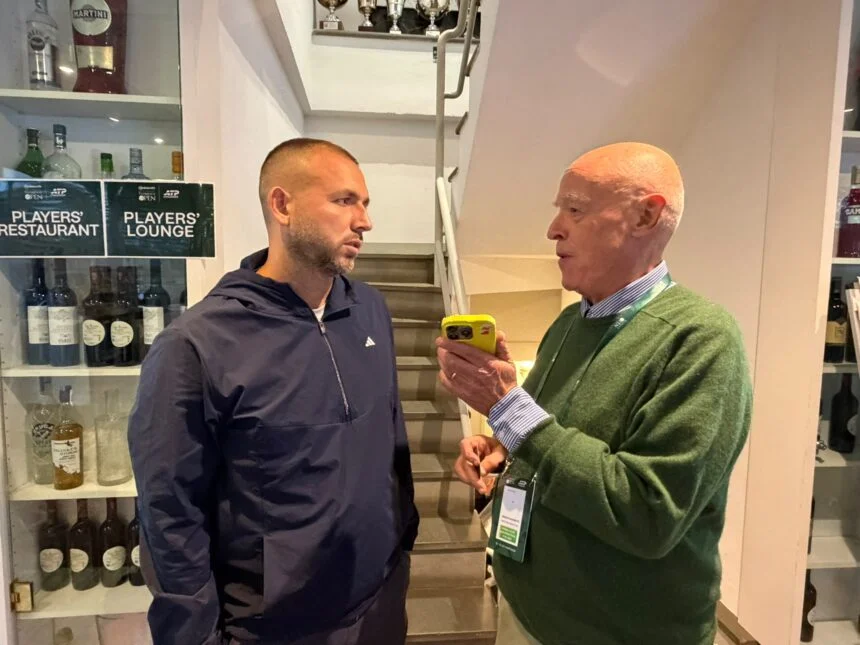
Dan Evans’ early verdict on Henry Searle is encouraging, but carefully qualified: the 20-year-old has the potential to become a good player, and the work of turning that potential into results belongs to Searle. Evans, who has moved from the ATP Tour into a personal coaching role, sees development as a matter of adapting, competing and learning from the losses that come along the way.
That distinction matters for a player whose junior résumé can invite expectations. Searle won the Wimbledon boys’ title in 2023 and has since reached No. 214 in the world, six places above his current ranking of 220. Evans’ message is that the junior title is a marker of past achievement, not a shortcut through the challenges of the professional game.
From junior champion to Challenger regular
Searle has already made progress at Challenger level, winning two titles earlier this year with Evans’ guidance. The latest test came at the Florence Open, where he was seeded sixth. He won his opening match before losing in the second round to Czech qualifier Matthew William Donald, a player born in Germany who has yet to break into the top 400.
The ranking gap makes the defeat a useful measure of the distance Searle still has to cover. Evans described Donald as a good fighter who played smart tennis, and said Searle did not yet have the tools to win that match. His point wasn’t that one loss defines Searle; it was that matches expose whether a player can turn practice into effective choices under pressure.
“One thing is to practise and then to do it in the match,” Evans said. The gap between those settings is especially important for Searle, whom Evans calls “very raw.” He sees a need for the young Brit to adjust his game from the junior level, where a strong serve and physical presence may carry a player a long way, to a professional circuit that asks for more variety and better solutions.
Evans’ account of the Florence loss is direct, but not dismissive. Searle is on clay to learn different shots and add variety to his game. The defeat, in that sense, became part of the work. Evans urged him to accept the result, prepare for the next tournament and try again. On the Challenger circuit, the next week can bring another chance to apply what a difficult match has taught.
A personal coaching arrangement
Evans began helping Searle around January, while he was still playing and recovering from injuries that kept him out for much of the year. What began as informal assistance developed into a personal coaching role. Evans said Searle had changed coaches, was struggling early in the season and responded well to his input. As results improved, Evans agreed to travel with him for selected weeks.
The arrangement is personal rather than a role with Britain’s Lawn Tennis Association, though Evans said Searle also receives LTA support. His family, agent and other people around the player are involved as well. Evans’ own experience gives him a point of comparison: he recalled not having an agent at 20, and said he may have acquired one when he was ranked around 200.
How much Evans travels depends on the schedule and his own workload. He has followed Searle as much as he can, with some weeks off when travel becomes excessive. The current run of European tournaments makes trips manageable; after Florence, Searle was due to play in Sheffield. A fitness trainer also covers some weeks, and Evans said that if Searle improves, he may spend more time with him and bring in additional help.
That structure suggests a coaching relationship still taking shape. Evans is not promising to be present every week, nor does he describe himself as responsible for producing a particular ranking. His job is to offer guidance, while Searle has to absorb it and do the work on court. “I can’t do it for him,” Evans said, putting the responsibility for the next step squarely with the player.
Experience with a clear limit
Evans brings substantial experience to the role. The Birmingham-born former British No. 1 won two ATP titles, reached the last 16 at the Australian Open in 2017 and the US Open in 2021, and made two Masters semifinal appearances. He was also part of the Britain team that ended a 79-year wait for a Davis Cup title.
His own career was winding down when he took on coaching. At Wimbledon, Evans missed out on a main-draw wild card and lost in the second round of qualifying. He also played doubles with Searle, a partnership that connected his final stages as a competitor with his developing work as a coach.
Asked why he wanted to take on the role after a career that included major appearances and roughly $10 million in earnings, Evans pointed to shared roots and the chance to help someone he likes. Searle comes from an area near Birmingham, and Evans said he started helping almost by accident. He values Searle’s character and describes him as relaxed and willing to listen.
That personal connection informs Evans’ commitment, but he is explicit about its limits. He wants Searle to do well, yet says the outcome is up to him. Improvement depends on how quickly Searle learns from situations such as the match against Donald and translates those lessons into his play.
Potential will be judged on court
Evans considers Searle one of Britain’s most interesting prospects in his age group. The qualification is revealing: age and junior success don’t count for much once a player steps into a professional match. “Junior Wimbledon didn’t win him that match,” Evans said of the Florence defeat.
For Searle, the immediate task is practical: become less predictable, add options to his game and show in matches what he has been practising. Evans sees a good chance for him to become a good tennis player, but leaves the pace of progress to Searle himself. The next ranking gains will depend on whether the lessons from losses become better decisions when the next opportunity arrives.
Discussion
Sign in to join the discussion.