With scaled sports businesses scarce, investors can look to smaller platforms, adjacent industries, international markets and public companies to build scale.
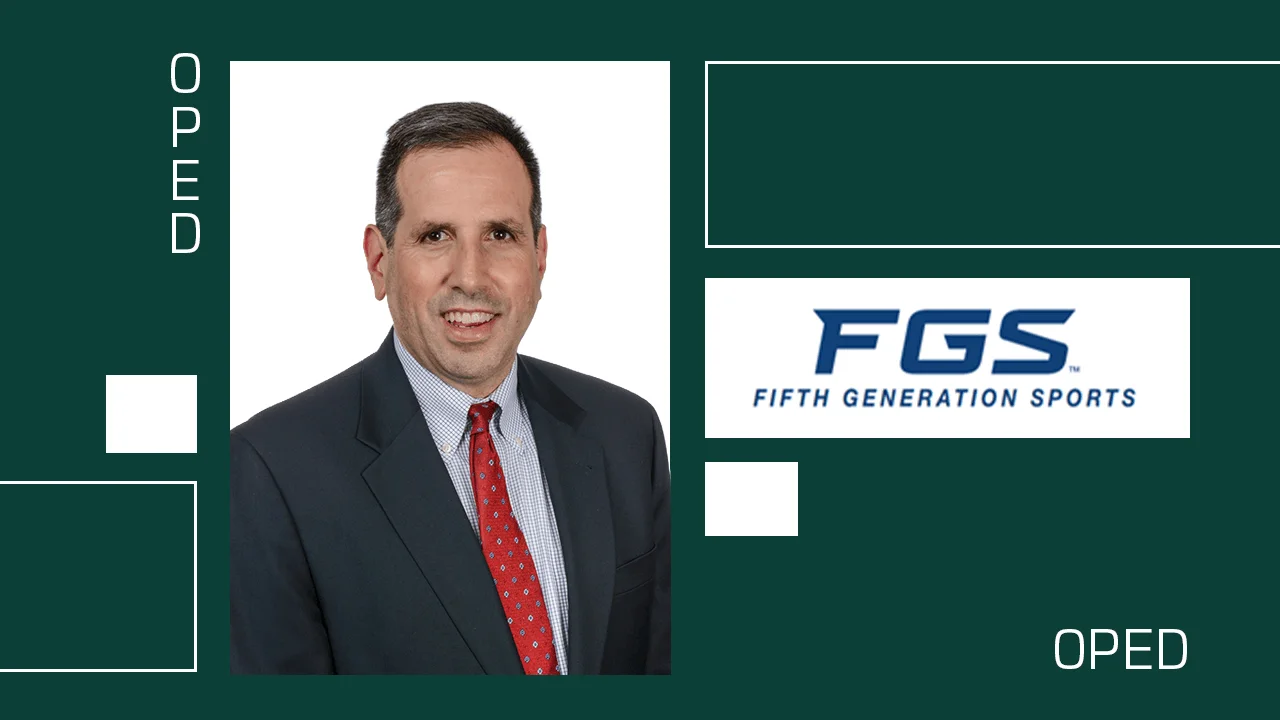
Today’s guest columnist is Chris Russo, CEO of Fifth Generation Sports.
Private equity firms looking for scale in sports have a sourcing problem: there are few independent businesses in the sector with at least $10 million in EBITDA. That scarcity concentrates bidders around recognizable assets, and strong competition can push prices well beyond what makes a deal attractive. Investors may find better opportunities by changing the question from “Which scaled sports company is for sale?” to “What can we build into a scaled sports company?”
The opportunity extends well beyond professional teams. Investors are pursuing events, agencies, technology, media, youth sports and consumer products, but the underlying challenge persists across those categories. The familiar targets are limited. A broader search can mean more operational work and execution risk, yet it can also help investors avoid crowded processes and develop platforms with a more distinctive growth path.
Build from a smaller starting point
One route is to buy a business with $3 million to $5 million in EBITDA and use it as the base for a larger platform. That calls for patience and a clear plan for growth through acquisitions or expansion. Smaller companies may have thin management teams, less developed systems and heavier reliance on a founder or a handful of customers. The projected add-ons may never materialize, leaving the investor with a smaller asset than intended.
Fund size can also make this strategy difficult. A large private equity firm may not be able to put its capital to work efficiently in an investment of this scale. So the approach is most practical for investors whose fund structure, operating resources and appetite for building fit the size of the initial company. For those investors, a modest starting point can create access to a market where ready-made platforms are rare.
Consider products and facilities as platform foundations
Many buyers gravitate toward asset-light service businesses with recurring revenue, high margins and modest capital needs. Those characteristics have obvious appeal, but they also steer competing firms toward the same types of companies. Sports equipment makers and venue operators can attract less attention because they involve inventory, manufacturing, property or significant capital spending.
Those demands can be part of the opportunity. Products and facilities can create direct relationships with athletes, families and teams, while providing a base from which to add services with stronger margins. A venue, for example, can host tournaments, camps and leagues. The asset’s value may then come from the activity and customer relationships it supports, as well as from the property itself.
Unrivaled Sports offers an example of this approach. Launched in 2024 by Josh Harris and David Blitzer with investment from The Chernin Group, the company brought together Ripken Baseball, Cooperstown All Star Village, Sports Force Parks and Baseball Factory. Its mix of destinations, tournaments, leagues and camps shows how physical locations can underpin a wider youth sports business.
Give an adjacent company a sports entry point
A company doesn’t need a sports identity to become a sports platform. Marketing, experiential and professional-services firms may already have capabilities that sports organizations need. What they may lack is the industry credibility, relationships or specialist leadership to win that work consistently.
An investor can pair an established operating business with experienced sports executives and targeted acquisitions. That gives the company a starting base and a way to enter the sector without depending on a pure-play sports business being available. It can also broaden the company’s customer mix and create a new growth channel. The economics depend on execution: industry introductions and specialist hires need to translate into paying clients.
The Gersh Agency illustrates the model. Crestview Partners invested in the established entertainment talent agency in 2023. In December 2024, Gersh acquired You First, a global sports representation and marketing agency, and launched Gersh Sports. The combination joined Gersh’s entertainment relationships and client-service capabilities with a dedicated sports operation and specialized leadership.
Expand the search beyond U.S. deal networks
Domestic sourcing can leave investors overlooking businesses in Europe, Canada, Australia, Latin America and Asia. Sports companies in those markets may have valuable technology, intellectual property or customer ties, while attracting less attention from U.S. sponsors. Buyers with established American sports relationships may be able to help those companies win local commercial partners and enter new markets.
Cross-border deals require a working understanding of local culture, taxes, currency, regulation and market conditions. Country-specific advisers or operating partners can help investors evaluate companies and navigate those differences. That adds complexity to diligence and ownership, but it can also widen the set of available targets and give a portfolio company room to grow in the United States.
Bruin Capital’s acquisition of Italy-based Deltatre in 2016 demonstrates the potential. The sports technology and streaming company had clients including FIFA and UEFA. It later expanded into the Americas, where Bruin’s relationships helped it secure commercial deals with MLB, MLS and the NFL, among others. Bain Capital bought Deltatre from Bruin in 2022.
Keep smaller public companies on the list
Publicly traded sports businesses, particularly small- and mid-cap companies, are another possible source of platform investments. Some receive limited analyst attention, trade with low liquidity or carry market valuations that don’t fully capture the assets they own. A public listing can complicate an acquisition, adding public shareholders, financing conditions and a more visible transaction process. It needn’t end the inquiry.
Private ownership can give a company more time and flexibility to change its operations, without the same focus on quarterly market expectations. Collectors Universe, the parent company of sports-card grading business PSA, went private in 2021 in a deal led by Nat Turner, D1 Capital Partners and Steve Cohen’s Cohen Private Ventures. The transaction valued its equity at $853 million. In 2022, the company announced a $100 million capital raise at a $4.3 billion valuation.
That outcome doesn’t make the public-to-private route simple or repeatable. It does show why investors might assess a business on its operations, assets and growth prospects instead of ruling it out because its shares trade publicly. Turner’s industry knowledge and private capital accompanied Collectors Universe as it continued to build its position in sports collectibles.
Make the platform the investment thesis
The supply of sports businesses with at least $10 million in EBITDA is likely to remain limited in the near term. Firms that pursue the same established targets will face intense competition. Smaller companies, facilities and products, adjacent businesses, overseas targets and public companies each offer another way into the sector, with different demands on capital and operating expertise.
The central task is to match a sourcing strategy to the investor’s ability to build. A smaller anchor needs add-on capacity and hands-on support. A facility or product company needs a plan to grow its services. An adjacent or international business needs credible sports leadership and commercial access. The most useful question for investors may be less about finding a finished platform and more about identifying the company, capabilities and relationships that can make one.
Chris Russo is CEO of Fifth Generation Sports, a boutique advisory firm focused on middle market sports transactions. His clients include founder-owned sports businesses and private equity firms, including a firm discussed in this article. Previously, Russo served as a managing director at Houlihan Lokey, and before his tenure in investment banking, he managed the NFL’s digital media group. Russo holds a BA from Northwestern University and an MBA from Harvard Business School.
Discussion
Sign in to join the discussion.