Florida State could owe Mike Norvell up to $50.34 million, adding to heavy athletics debt as the school funds its push to compete with top programs.
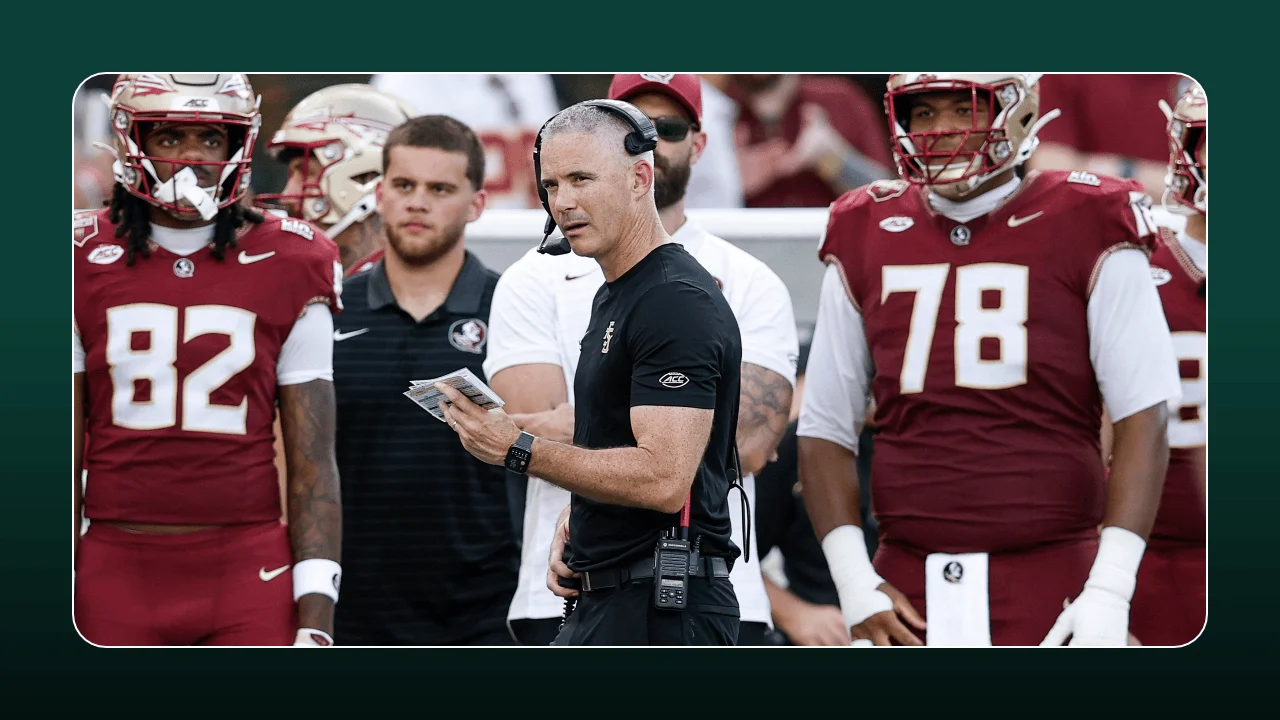
Florida State’s coaching change has put a hefty price tag on a football season that already strained the university’s finances. The school could owe former head coach Mike Norvell between $47.68 million and $50.34 million, adding another large commitment to an athletics program carrying $437 million in debt. The gap between those estimates reflects contract language and payment choices, but either figure would make the buyout a substantial claim on resources the department had expected to direct toward growth.
That claim lands alongside the costs of rebuilding a football program and maintaining the facilities and operations already financed through borrowing. A coaching change is a sporting decision with an immediate financial tail: the university has to account for the departing coach’s contract while planning for the staff and recruiting needs of the next chapter. Florida State’s challenge is to make those commitments fit within a department whose ambitions have outpaced the easy availability of new revenue.
A buyout with a wide range
After a home loss to Clemson, Florida State announced Sunday that it was parting ways with Norvell in his seventh season. His latest amended contract, originally signed in 2019, calls for liquidated damages equal to 85% of the compensation remaining through Dec. 31, 2031. That formula ties the cost directly to the years left on the deal, making the timing of the separation a major part of the calculation.
The final amount depends on how a provision restoring some of Norvell’s forfeited compensation is interpreted. Florida State can pay in monthly installments or choose a lump sum discounted to present value. A mitigation provision in the agreement may also reduce the school’s obligation. Those terms leave room for a meaningful difference between the upper and lower estimates, even though the basic obligation is already large.
The contract’s mechanics matter because the headline figure doesn’t tell the whole story of when the money would leave the department or how much could ultimately be offset. Installments would spread payments over time; a discounted lump sum would bring the obligation forward at a lower present-value amount. The mitigation language introduces another variable. Until those details are resolved, the range is a clearer guide to the financial exposure than any single figure.
The payout arrives as the Florida State football team sits near the bottom of the ACC, with a 1-4 conference record. Replacing the coaching staff will add a fresh eight-figure cost, while the program misses the potential revenue boost of a College Football Playoff run. The result is a two-sided squeeze: added costs arrive as one possible source of income disappears.
That combination makes the timing especially difficult. A new coaching staff will need resources at the same moment the program is absorbing a contractual payout, and the team’s record gives the department little basis to count on postseason income. The numbers here are underwhelming. They show how quickly a plan built around growth can come under pressure when competitive results and contract obligations move in the wrong direction.
Spending plans meet debt obligations
Florida State had planned to grow its athletics budget beyond $250 million by fiscal 2027, up $40 million from FY25. Football accounted for $52.9 million of that projected budget. At an April presentation to the university’s board, athletic director Michael Alford said higher expenses would be balanced by ticket sales, events at the renovated Doak Campbell Stadium and a possible $20 million from a playoff appearance, according to the Tallahassee Democrat report.
That budget plan depended on multiple revenue sources working together. Ticket sales and stadium events can support recurring activity, while playoff revenue would depend on the team earning a place in the postseason. These sources aren’t interchangeable: one is tied to attendance and events, the other to on-field results. The projected budget therefore represented an ambition, not a guarantee that every expected dollar would arrive.
That expected playoff revenue is now out of reach, while the buyout adds another expense. Florida State reported $437 million in athletics-related debt at the end of FY25, the second-highest figure among public FBS universities, behind Penn State, according to Sportico reporting. Revenue bonds for Doak Campbell Stadium renovations and a new football operations center account for much of the borrowing. Those projects may support the department’s ability to host events and operate its football program, but the bonds also bring obligations that persist beyond a single season.
Athletics debt made up 71% of Florida State’s total institutional debt in the latest fiscal cycle. The department also reported $33.9 million in direct university subsidies and $8.6 million from student fees in FY25, a notable shift for a program that had historically depended less on main-campus support. That change gives the finances a broader campus dimension: athletics spending is increasingly linked to funds and fees that sit beyond the department’s own revenue streams.
The figures describe a department carrying both long-term financing costs and newer operating pressures. Stadium and operations-center debt is tied to major facilities, while subsidies and student fees helped support athletics in the latest fiscal cycle. A buyout adds a different kind of burden, one created by a coaching decision rather than a construction project. Together, those commitments narrow the room available for the next set of priorities.
Seeking new ways to fund athletics
The school’s reliance on campus funds grew after Florida State used a new state law in June 2025 to redirect money from other university sources toward athlete revenue-sharing payments tied to the House v. NCAA settlement. The move reflects a wider cost that colleges have had to account for as they provide revenue-sharing payments to athletes. For Florida State, the financing question now includes how to support those payments while also covering the ordinary costs of teams, facilities and staff.
Florida State has explored other funding options. Starting in 2022, it held talks with private equity firms Sixth Street and Arctos Partners under the name “Project Osceola,” but the discussions ended in late 2023 without an agreement. The school later sued the ACC over its media-rights deal and departure penalties. A March 2025 settlement, which also involved Clemson, changed the conference’s revenue-sharing model and exit terms.
Those efforts show that Florida State has looked beyond routine ticket and event income for ways to support its program. The private equity discussions didn’t produce an agreement, while the settlement changed the terms of the school’s relationship with the conference. Each development affects a different part of the financial picture, and none removes the need to balance current spending against debts already incurred.
What the buyout means for the next rebuild
Florida State is trying to keep pace with the spending power of Big Ten and SEC programs while managing a growing set of obligations. Norvell’s buyout makes that tension harder to ignore: the school’s next football rebuild will have to compete for money with debt service and the costs of running the wider athletics department. This is more significant than it looks, because the payout doesn’t arrive in isolation. It joins a financial structure already shaped by construction debt, campus support and plans for athlete revenue-sharing.
If you’re working in this space, the practical question is how much of the planned spending can still be supported if projected income falls short and contractual costs rise. Florida State’s budget presentation pointed to several sources of revenue, but the playoff component is no longer available for this season. The remaining sources and the timing of payments will matter as the department weighs its next coaching and operating decisions (and this is the part most people overlook).
The buyout also puts a limit on how easily a program can treat a coaching change as a clean reset. The next staff will inherit a team and a competitive challenge, while the department carries the financial consequences of the previous contract. That’s a difficult starting point. Florida State can still pursue its ambitions, but the available resources will have to cover both the rebuilding effort and obligations that extend beyond the field.
Discussion
Sign in to join the discussion.