Mercedes expects revenue to top £750 million as its F1 team combines strong sponsorship growth with a dominant 2026 season.
A championship season with a billion-dollar forecast
Mercedes’ 2026 season is turning sporting success into a major commercial year. Annual revenue is expected to exceed £750 million, or about $1 billion at current exchange rates, according to a person familiar with Formula 1 team finances. Mercedes declined to comment.
That forecast is a striking marker for a racing operation: it puts the team in range of the scale more commonly associated with the world’s largest football and baseball clubs. It also reflects a business that reaches beyond race results, drawing income from commercial partners, licensing and F1’s prize money. The estimate comes from a source familiar with team finances, so it should be read as a forecast rather than a reported result in Mercedes’ accounts.
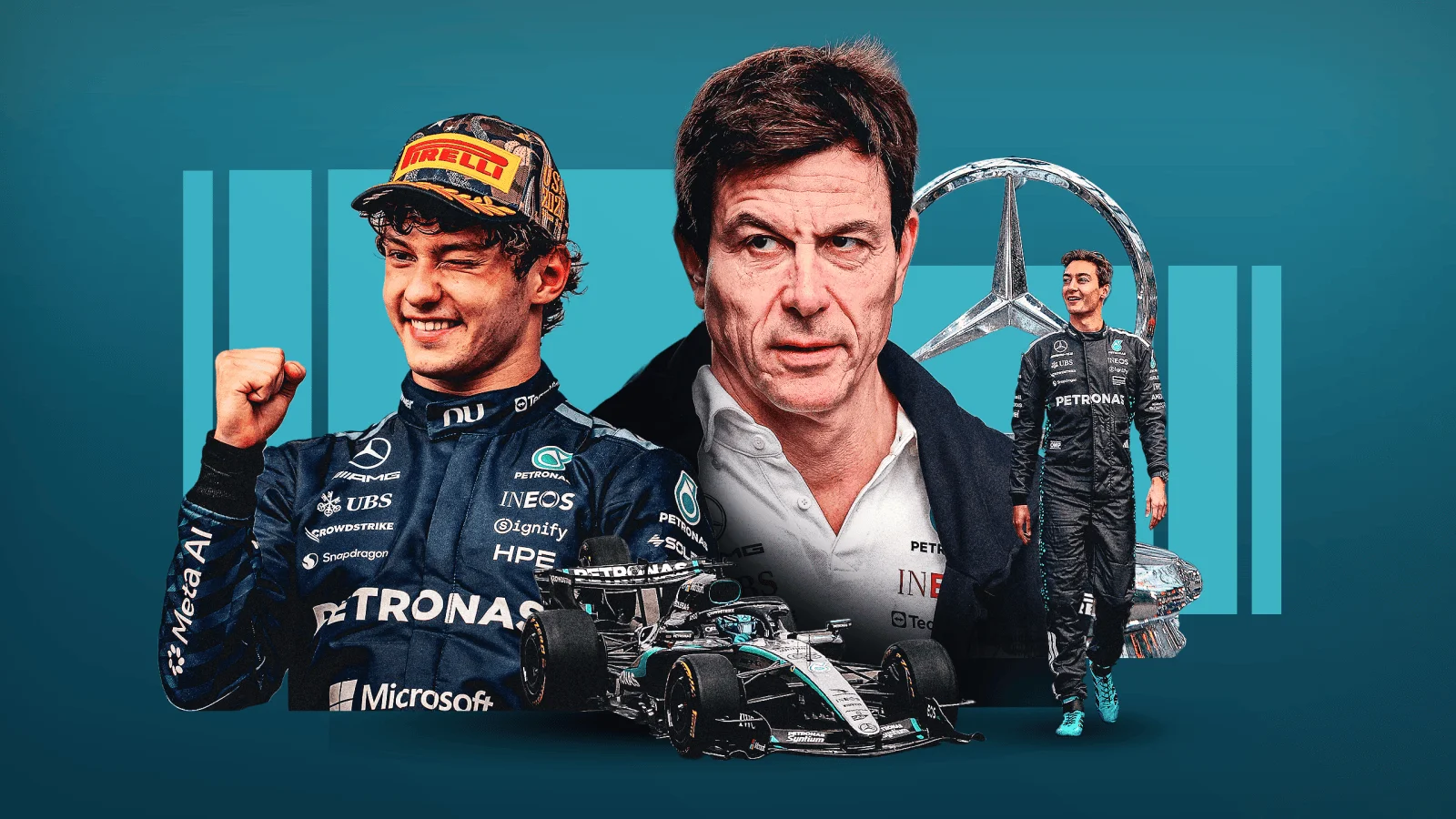
The season’s sporting story has supplied a powerful backdrop. 20-year-old Kimi Antonelli secured the Drivers’ Championship with a third-place finish in Mexico City. It is Mercedes’ 10th title and its first since Lewis Hamilton won the 2020 championship, his seventh consecutive drivers’ crown with the team.
A title can sharpen a team’s commercial pitch: sponsors gain association with a winner, while existing partners have a fresh story to tell customers and staff. But the relationship between success and revenue isn’t immediate or automatic. F1’s payment schedule means the accounting effect of a championship can lag well behind the celebrations on track.
Winning season, delayed prize money
Mercedes has led the field under F1’s 2026 regulations, which changed the cars and power units. George Russell and Antonelli have collected 12 wins across the season’s first 18 races. The team’s near-certain Constructors’ Championship, however, won’t boost this year’s revenue: F1 distributes prize money a year later, and Mercedes finished second to McLaren in 2025.
That delay matters because race performance and reported revenue don’t line up neatly. A team can dominate one season while its accounts still reflect the standings and payments from the prior year. The championship may strengthen Mercedes’ standing with partners now, while the direct prize-money benefit arrives later under F1’s distribution timetable.
That timing helps explain why the revenue forecast rests heavily on commercial activity. Mercedes recorded £633 million ($849 million) in revenue last year, roughly flat year over year. Sponsorship growth was offset by smaller F1 payouts after the team placed fourth in the 2024 constructors’ standings.
The contrast between flat revenue and a stronger forecast points to the mix of income as much as the headline total. Prize money can move with past results, while commercial deals may reflect longer relationships and the team’s ability to sell access to its brand. The accounts show that sponsorship growth already helped counter weaker F1 payments, though they don’t establish how much each source will contribute to the coming year’s increase.
Commercial and licensing revenue reached £415 million ($556 million) in 2025. Mercedes reported a $5.66 billion TV Advertising Value Equivalent for its 24 global commercial partners. Adidas, Meta AI and Nasdaq were among the brands that joined the roster that year.
The advertising value figure is a measure of estimated exposure, not cash paid to Mercedes. It gives a sense of the visibility partners receive, but it shouldn’t be confused with revenue or profit. That distinction matters when a large promotional value is presented alongside actual financial figures: each describes a different part of the business.
Sponsors drive the commercial push
The 2026 partner list has grown to include Microsoft, Nu, Vercel, RH (formerly Restoration Hardware) and Zuma. Mercedes also signed a multiyear agreement with Stripe last month, the payments company’s first sports sponsorship. The team has about 25 sponsors, led by title partner Petronas.
The breadth of the roster suggests that Mercedes can sell more than space on a car or team clothing. F1 partnerships can connect brands with race broadcasts, hospitality and the wider identity of a team, although the specific terms of these deals aren’t disclosed here. A list of recognizable names signals commercial reach; it doesn’t reveal the value or structure of each agreement.
Stripe’s agreement is notable on that front because it marks the company’s first sports sponsorship. For Mercedes, each new partner adds another commercial relationship to manage and another potential source of income. The test is whether that growth continues to translate into reported revenue, rather than merely a longer sponsor list.
Profit is rising alongside revenue. Mercedes-Benz Grand Prix reported a £167 million operating profit ($223 million) for 2025, surpassing its own previous F1 record of £156 million set in 2024. It is on track to top £200 million ($268 million) this year, setting another record.
That’s a substantial operating result, and it makes the revenue forecast more than a story about scale alone. Still, the projected profit remains a forecast, while the £167 million figure is reported for 2025. Keeping those categories separate gives readers a clearer view of what the business has already achieved and what it expects to achieve next.
The team’s commercial scale is drawing outside ownership interest, too. George Kurtz, CrowdStrike’s founder and CEO, acquired an indirect 5% stake through a minority investment in Toto Wolff’s Motorsports Invest. The deal valued Mercedes at $6 billion. CrowdStrike is also a team sponsor.
An ownership transaction offers a separate signal from annual revenue: it puts a value on the team as an asset, while the revenue figure measures money coming in during a year. The disclosed valuation shows that an investor was willing to back Mercedes at $6 billion through the stated structure. It doesn’t, by itself, explain the team’s future earnings or the terms of the investment.
What the billion-dollar threshold signals
If the forecast holds, Mercedes would join a small group of sports teams with annual revenue above $1 billion: the Dallas Cowboys, Los Angeles Dodgers, Real Madrid and FC Barcelona. Manchester United is projected to reach that level in the 2026–27 English Premier League season. Mercedes’ delayed championship payout means the next financial report may show how much of its growth comes from sponsors and licensing before the latest on-track results flow through.
This is more significant than it looks: a Formula 1 team reaching that threshold would show how far a racing organization can extend its business beyond prize money. Yet the comparison needs care, since teams and clubs can recognize income differently, and the figures here don’t provide a like-for-like breakdown. The headline milestone is compelling; the underlying mix of revenue is the more revealing measure.
What this means for you depends on what you’re tracking. If you're working in this space, watch whether the next accounts show commercial and licensing income continuing to rise, and how much the delayed F1 payments contribute. A single forecast can mark a turning point, but sustained growth depends on keeping partners interested after the current run of results becomes history.
The accounting lag leaves an open question. And this is the part most people overlook: the team’s projected billion-dollar year is arriving before the current championship’s prize money can fully appear in its revenue. The commercial engine is doing the immediate work. For now, that’s the clearest indication of how Mercedes is building its financial scale.
A milestone on paper. Whether it becomes a durable level of business will take more than one successful season to establish.
This story and its headline have been updated with Sunday’s results.
Discussion
Sign in to join the discussion.