Three men received a combined 10 years and two months in prison after a failed tunnel raid in Tooting was linked to more than £700,000 in burglaries.
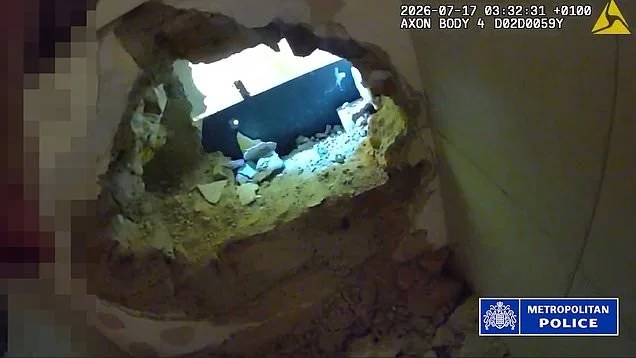
The failed attempt to tunnel into a Tooting jeweller exposed a burglary network linked to more than £700,000 in losses across London. Three men have been jailed for a combined 10 years and two months after admitting conspiracy to commit burglary and criminal damage. The case began with an attempted break-in at one shop, but the investigation widened to cover offences at businesses across the capital. That distinction matters: the tunnel was the immediate crime, while the alleged network gave police a broader set of incidents to examine.
Police intercepted the plot in Tooting
The men were caught shortly after 3am on July 17, while trying to dig from a massage parlour into the neighbouring jewellery shop on Mitcham Road. Body camera footage recorded officers responding to the break-in. The route suggests an effort to reach the shop through an adjoining property, rather than enter through its public frontage. That takes preparation, access and time; it also creates a risk that noise or activity will draw attention before anyone reaches the intended target.
The attempt was stopped before the men could complete the passage into the jeweller. That outcome is central to the case, but it doesn't mean the incident was minor: police recovered tools and equipment used to dig, and investigators later connected the group to other commercial burglaries. In cases of this kind, the physical evidence at one scene can help police test whether separate incidents share methods or participants. Here, the reported losses attached to the wider investigation exceeded £700,000.
Laurentiu-Daniel Nitisoara was arrested in a nearby alley. Officers found Ioan Asafeti hiding on a rooftop and handcuffed him. Sergiu Plastin was detained later that day at Stansted Airport as he tried to board a flight to Ireland. A flying squad tracked him to the airport using mobile phone data. The arrests happened in different places and at different times, giving investigators a sequence of events to establish after the attempted entry was interrupted.
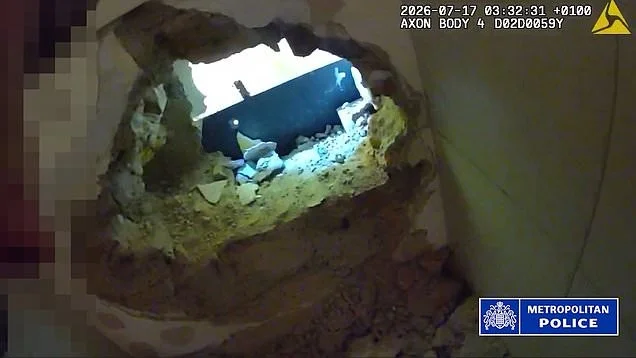
Police recovered discarded tools and equipment used to dig the passage. Investigators connected the group to burglaries at shops across the capital, with reported losses exceeding £700,000. Enquiries through Interpol also identified possible links to similar offences in Europe. The wording is careful: the European links were described as possible, and the available details don't establish which incidents were involved or whether they resulted in charges. Still, the enquiries point to investigators checking whether the London cases fit a pattern that may extend beyond the city.
Three sentences total 10 years and two months
The defendants appeared at Kingston Crown Court after pleading guilty in August. Asafeti, 39, received four years and 10 months in prison; Plastin, 42, was sentenced to three years and four months; and Nitisoara, 38, received two years. Together, the sentences amount to 10 years and two months. The guilty pleas resolve the defendants’ responsibility for the offences to which they admitted, while the broader claims about losses and possible links remain framed by the information reported in the case.
The sentence lengths differ, but the source doesn't explain the court's reasoning for each term. It would be easy to read the totals as a simple measure of the harm caused; that would go further than the facts allow. The reported losses relate to the wider set of shop burglaries, while the attempted tunnel into the Tooting jeweller was the incident that brought officers to the scene. The distinction helps keep the scale of the investigation in view without treating every loss as damage from this one attempt.

Detective Chief Inspector Craig Magee said the sentences showed that those targeting London businesses would be caught. He also said commercial burglary offences had fallen by 11 per cent across the capital over the past 12 months. That is a policing claim about the wider trend, not a result that can be attributed to this prosecution alone. A single case can show how one investigation worked; it can't, by itself, explain a citywide change in recorded offences.
What the case says about commercial burglary
Metropolitan Police figures put the decrease at 10.7 per cent in the year to September, compared with the preceding 12 months. The figure is close to Magee’s rounded 11 per cent, and gives readers a clearer measure of the period and comparison being cited. It doesn't say how many businesses were affected in absolute terms, or whether the decline was consistent across different kinds of shops. Those details aren't provided here, so the percentage should be read as a snapshot of the force’s reported trend.
The case illustrates how an attempted entry at one shop can lead investigators to a wider pattern of commercial burglaries. The value of the investigation lies partly in connecting evidence across incidents, then identifying people and possible links that might not be visible from one shop’s report alone. Here's the thing: a tunnel is striking, but the less visible work is the comparison of evidence, the tracing of suspects and the checks across jurisdictions. And this is the part most people overlook.
This is more significant than it looks for businesses: a break-in attempt can impose costs and disruption even when entry is stopped, while a pattern across several shops can make the consequences much larger. If you're working in this space, the case is a reminder that reports about a single attempted burglary may sit within a broader investigation. One arrest, one scene, several lines of enquiry. The source doesn't say what security steps shops should take, or whether the reported fall will continue; any firm forecast would be guesswork.
That said, the prosecution offers a concrete outcome: three men admitted the offences and received prison terms, and police say their investigation connected the group to substantial losses. The evidence described here supports a story about detection and case building, alongside a reported decline in commercial burglary. Whether that decline lasts is an open question. For now, the Tooting incident shows how an interrupted attempt can become the starting point for a much wider inquiry.
Discussion
Sign in to join the discussion.