Three former and current athletes challenge the NCAA’s Division III scholarship ban, invoking Alston and seeking damages for a class that could number hundreds of thousands.
A new antitrust lawsuit asks whether the NCAA can keep Division III schools from offering athletic scholarships, even as athletes in the division receive name, image and likeness compensation. The three plaintiffs seek damages for a potentially large class and an order barring the NCAA from enforcing its aid ban.
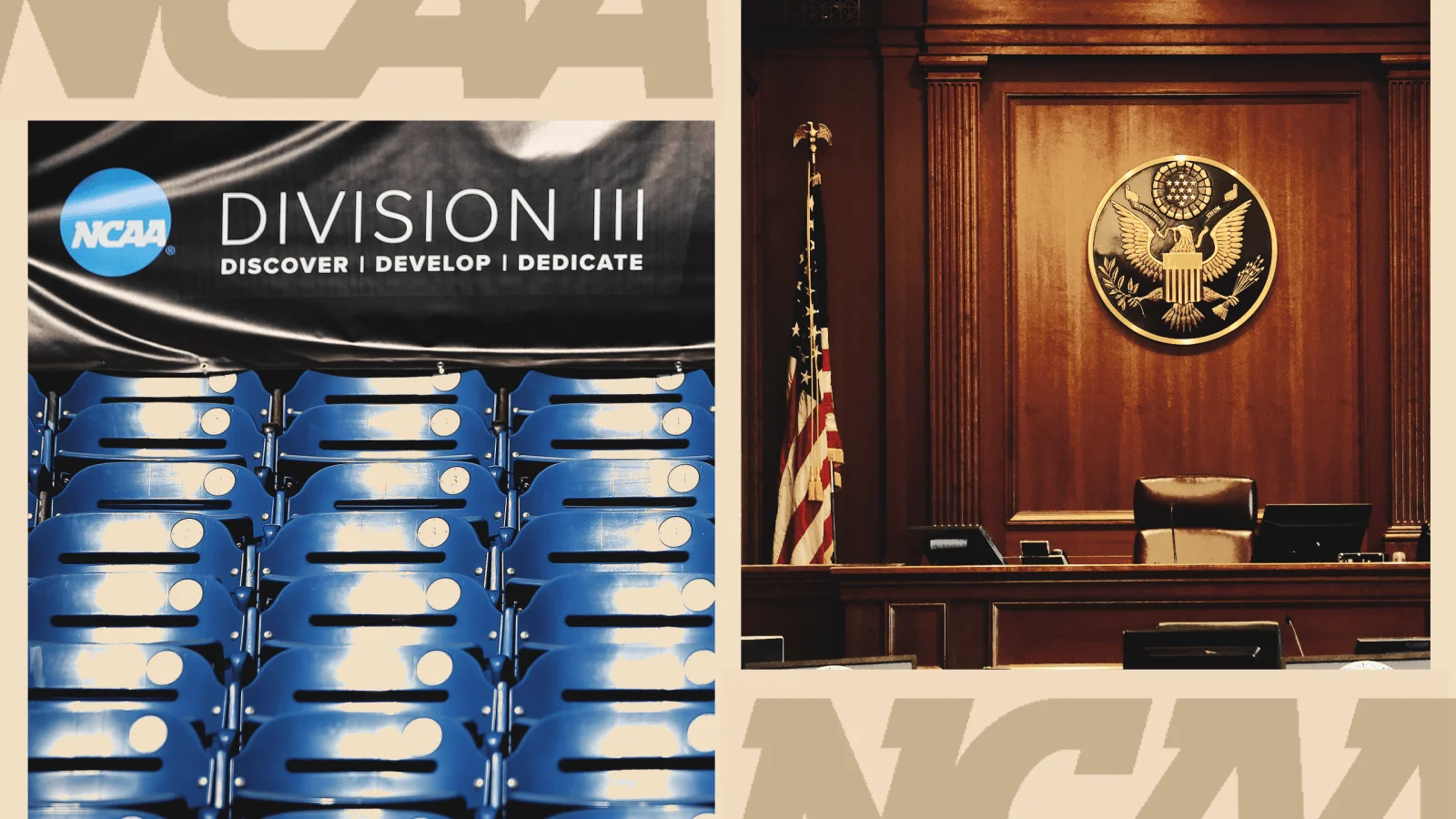
The plaintiffs’ case
Filed Friday in the U.S. District Court for the Central District of California, the complaint targets NCAA Division III Bylaw 15.01.3. It bars member schools from awarding financial aid based on an athlete’s leadership, ability, participation or performance.
The named plaintiffs are Jackson Hale, a senior defensive back at Pacific Lutheran University; Connor Printz, who played basketball at Claremont McKenna College from 2020 to 2024; and Chris Jennings, who competed in swimming and lacrosse at the University of Lynchburg from 2019 to 2023. They seek to represent athletes who competed in Division III from Oct. 21, 2022 onward, a group the complaint says could number in the hundreds of thousands.
The complaint frames the rule as a price-fixing agreement across more than 400 Division III schools. It alleges the NCAA has conspired “to fix the price of Division III athletic labor at zero” by preventing every member from offering athletic scholarships.
The plaintiffs’ individual accounts give that argument a financial focus. Printz says he left basketball early in the 2023-24 season to concentrate on his social media business, after taking on substantial student loans to cover nearly $80,000 in tuition, room and board that year. The complaint argues that even partial athletic aid could have kept him on the team through his senior season.
Printz also says he earned as much as $50,000 in endorsement deals with Reebok, Clif Bar and other brands while playing at Claremont McKenna. The complaint says he and Hale routinely received NIL compensation, a point it uses to question the NCAA’s past defense of restrictions in the name of amateurism.
A changed legal backdrop
The case revisits an issue that faced a setback in Rock v. NCAA. In 2013, a federal court in Indiana dismissed claims challenging the Division III scholarship ban at the pleading stage, finding the restriction presumptively pro-competitive. The wider case continued, but ended after the court denied class certification in 2016.
This complaint leans on the Supreme Court’s unanimous decision in NCAA v. Alston, which held that agreements among NCAA conferences restricting athlete-related benefits are subject to antitrust review. The plaintiffs characterize the Division III aid rule as a multi-conference agreement of the kind discussed in Alston.
They also point to the 9th U.S. Circuit Court of Appeals, where earlier rulings in O’Bannon v. NCAA and Alston helped weaken limits on athlete benefits. That court’s record gives the plaintiffs a different setting from the Indiana case, though the new claims still have to overcome the reasoning that sank the Division III challenge in Rock.
The complaint cites a University of Lynchburg matter as further context. In January, the school reached a negotiated resolution with the NCAA over a major infractions case involving $155,325 in financial aid deemed improper during the 2022-23 academic year. The filing does not say whether Jennings received any of that aid.
Potential scale
The NCAA estimates that about 210,000 athletes compete in Division III each year. The plaintiffs seek treble damages under Section 4 of the Clayton Antitrust Act; any eventual exposure would depend on class certification, the damages period and the court’s assessment of antitrust injury. The complaint says the potential damages could reach billions of dollars.
Michael Goldberg, co-lead counsel in Ray v. NCAA, is among the attorneys representing the athletes. The legal team also includes Title IX attorney Christine Brown, Burns Charest lawyer Matt Strauser and local counsel Andrew Purdy of Brown Neri Smith & Khan. An NCAA spokesperson did not immediately respond to a request for comment.
The suit’s central test is whether the post-Alston antitrust framework can reach a blanket restriction on athletic aid in a division where athletes already receive NIL payments. Its progress will show whether the earlier Rock ruling still sets the terms of that debate.
Discussion
Sign in to join the discussion.