The Leadville 100 MTB race has modified its course due to the Willow Fire, missing iconic segments but ensuring racer safety.

Just over a month ago, the Willow Fire ignited just outside Leadville, Colorado, fueled by hot and arid conditions, alongside one of the lowest snowpacks recorded in the state. By August 4, the wildfire had burned 7,200 acres and was 67% contained, forcing changes to significant parts of the Leadville 100 MTB course, including the well-known Powerline climb. With the race set for August 15, the uncertainty surrounding the event has loomed large.
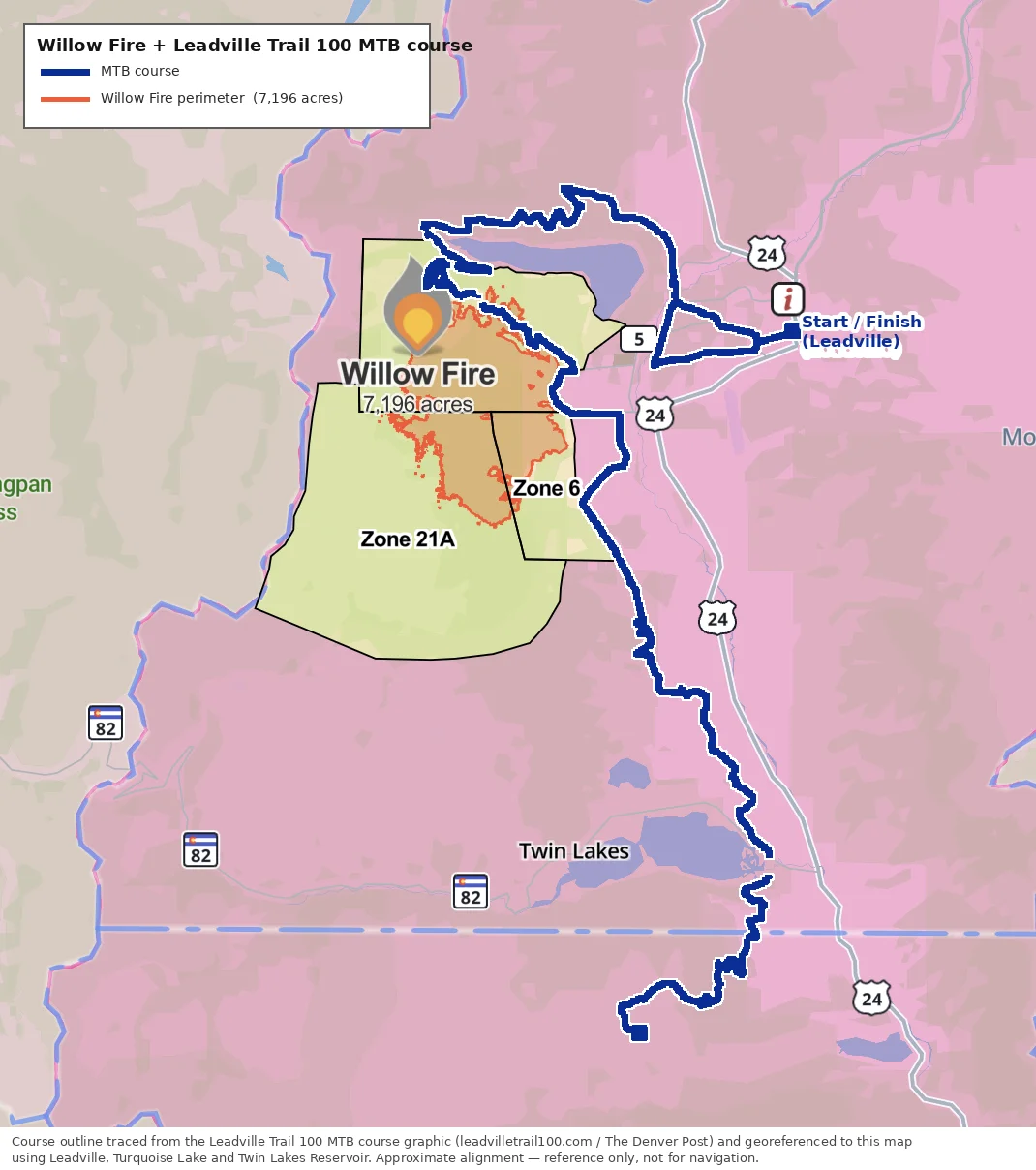
Following weeks of speculation, race organizers at Life Time Fitness provided clarity amidst the chaos. The newly revised track circumvents fire-affected areas, omitting critical portions like Powerline and Sugarloaf Mountain. The absence of Powerline is particularly impactful; it serves as an essential tactical point for riders, acting as both a critical separation stage early in the race and a vital point for late-race strategic maneuvers when groups might still be tight.
Course Changes and Participant Concerns
The revised route maintains the race's traditional launch in Leadville, featuring the initial St. Kevin's climb. Rather than traversing around Turquoise Lake, riders will now circle back on the northern side and continue along the lake's eastern edge, eventually rejoining the original course at the Fish Hatchery/Outward Bound checkpoint and aid station. While this alteration keeps the celebration of the start, it omits crucial segments that riders had known and prepared for.
While the out-and-back climb to Columbine Mine remains intact, racers will now face a 102-mile (164 km) route, shortened by two miles from the standard, with a climbing total of 9,916 feet (3,016 m), compared to the original's 11,000 feet (3,350 m). This modification could change the dynamics of the race, as the reduced elevation gain could level the playing field. However, there’s an inherent challenge that comes with new territory. Riders need to recalibrate their strategies for what has long been established as a grueling challenge.

According to Life Time in their announcement, "The team has worked closely with the local authorities to develop a revised route that ensures riders can safely take on the historic race while avoiding areas impacted by the Willow Fire." Nevertheless, concerns linger about various issues, including air quality, potential race cancellation, and changes to the entry deferral policies, which still weigh heavily on participants' minds.
The Allure of Leadville's Course
The Leadville 100 takes place in scenic Lake County, just a two-hour drive from Denver, with an elevation of over 10,000 feet (3,000 meters). Traditionally, the course covers 104 miles (167 km) and boasts 11,000 feet (3,350 m) of climbing, reaching a maximum elevation of just above 12,500 feet (3,800 m). The rugged terrain and breathtaking views establish the race as one of the most sought-after experiences for mountain bikers. But these geographical elements are more than just aesthetics; they shape the nature of the competition itself.
Participants often describe Leadville as a rite of passage, where physical endurance meets mental fortitude. The Powerline climb, in particular, has become a symbol of this clash, where racers must dig deep not just into their physical capability but also their psychological resilience. To omit such a defining feature from the race redefines the challenge and may alter competitors' motivations and strategies. Those who’ve trained specifically for the elevation changes that Powerline brings may feel they’ve been shortchanged, which could result in disappointment or resentment.
Implications of the Wildfire on Future Events
Wildfires have become increasingly prevalent with shifts in climate, resulting in prolonged droughts and rising temperatures. This incident with the Willow Fire is just one example of how environmental conditions can disrupt sporting events. For organizers and participants alike, this raises serious questions about the future. Will races continue to be impacted by natural disasters? What safeguards or contingency plans might be necessary to ensure the safety and enjoyment of events like the Leadville 100?
Insights from this scenario remind us of the unpredictable nature of mountain sports. Organizers need to establish better protocols for weather-related contingencies. If you're working in this space, whether as an athlete, a race organizer, or part of the support crew, it's essential to remain adaptable and ready for the unexpected. The implications might affect how races are marketed and how participants prepare mentally and physically.
The Leadville 100's enduring legacy hinges not only on its scenic course and demanding climbs but also on its ability to adapt to unforeseen circumstances like this. As natural events threaten to reshape not just the physical terrain but the future of endurance sports, participants and organizers share a collective responsibility to make informed choices and prepare for contingencies. In this evolving narrative, the primary takeaway may very well be that the spirit of endurance isn't about conquering nature—it's about adapting to it.
Discussion
Sign in to join the discussion.