Christa Pike's botched execution attempts raise serious ethical and legal questions, as her attorneys provide chilling details of the ordeal.
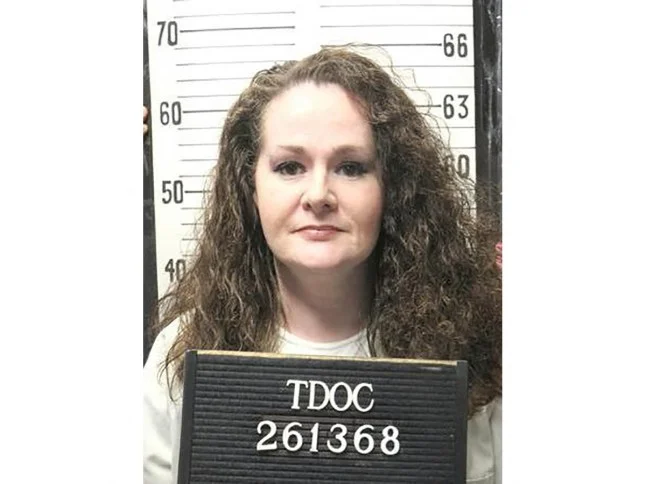
Christa Pike remains alive following an execution attempt that went horribly wrong, with her legal team detailing a series of failures in the process. The grim event unfolded as executioners struggled to find a suitable vein for the lethal injection, leading them to puncture her left arm with multiple needles, raising deep ethical and procedural questions about the administration of capital punishment.
Legal Team's Concerns
Attorney Randy Spivey, who witnessed the proceedings, reported that a total of seven needles were inserted into Pike's left arm. He recalled one needle appearing bent when taken out, emphasizing the disarray of the execution attempt. “Last night was not inefficient; it was cruel, and it was torturous. It was also predictable,” Spivey stated, reflecting his deep discontent with how the state of Tennessee handled the execution. This criticism underscores not just individual incompetence but systemic issues in the execution protocols used by many states that continue to employ lethal injection.
The events that transpired during Pike's execution raise significant concerns about the preparation and training of execution teams. Similar systems typically rely on medical professionals to ensure proper intravenous access, yet the apparent lack of expertise demonstrated in Pike's case suggests a troubling gap. If the team responsible for executing capital punishment cannot reliably administer a lethal injection, are they truly equipped to carry out the ultimate penalty? The failure of executioners to find access points is more than a technical issue; it reflects broader questions about the morality and humaneness of capital punishment itself.
Health Complications and Ethical Dilemmas
As the ordeal unfolded, Spivey reassured the public that Pike was presently receiving emergency medical care. However, he expressed uncertainty about her health status following the harrowing experience. "Christa is alive right now," he confirmed during a press conference, though he added, "we don’t have a sense of her prognosis." Pike's execution raised alarms as legal experts and human rights advocates drew attention to the implications of such a flawed process, especially given that lethal injection is frequently defended as a humane alternative to more barbaric methods of execution.
Alongside Spivey, attorney Steve Ferrell highlighted Pike's longstanding blood disorder, which complicates intravenous access. "Throughout her life, she’s explained to us that she had trouble having blood drawn," Ferrell said. This crucial detail illuminates the issues surrounding the suitability of lethal injection for individuals with specific health conditions, especially when the procedures fail to consider these medical realities. What this means for you, as a follower of these developments, is that the conversation surrounding capital punishment is fundamentally linked to both medical ethics and the law, raising questions about who is deemed fit for execution.
Pike herself appeared conscious and engaged during the chaotic execution attempt. She reportedly assisted the medical staff in pointing out potential sites for the IV lines. “She told them over and over, ‘please try higher on my shoulder,’” Spivey noted, underscoring her cooperation amidst the distress. This moment, poignant as it is troubling, outlines the stark reality faced by those on death row: even in their final moments, they retain a level of agency. The humanity in Pike’s plea reveals an unsettling truth about the system’s failures—it’s not just about the individuals involved, but also about the process that leads to their deaths.
Accusations of Torture
Legal representatives described the challenges encountered in Pike’s execution as tantamount to torture, urging the commutation of her death sentence. The event sparked intense scrutiny regarding the humane treatment of inmates on death row and the ethical ramifications of capital punishment, especially in cases that resemble medical malpractice more than judicial execution.
As Pike lay strapped to the gurney, she expressed a sense of readiness for her fate, stating, “I’m at peace. I’m ready to be free. … This is a happy day.” However, Pike complained about a sensation in her arm that felt unbearable, questioning if such experiences were typical during executions. The juxtaposition of her acceptance and her pain raises disturbing questions about the psychological and physical toll of the death penalty. That juxtaposition, in particular, is something that witnesses and advocates for reform cannot afford to ignore.
Witness accounts described a disconcerting scene where Pike remained conscious after receiving doses of pentobarbital, a powerful sedative. Reports from onlookers, including WPLN reporter Catherine Sweeney, revealed that even after two injections, Pike was still responsive, raising serious concerns about the efficacy and ethicality of the methods used. One observer recalled, "They went through two rounds, and she was still breathing at the end. It was very ragged; she lifted her head up and was looking around at one point." Such testimony not only paints a troubling image of the execution process but amplifies the ongoing debate surrounding capital punishment in Tennessee, especially given its historical context. Pike, sentenced to death in 1997, faced her potential fate as the first woman in the state to be executed in about two centuries.
Wider Implications
The ramifications of this execution attempt extend beyond Pike’s individual case. The botched execution invites vast discussions on the humane application of lethal injections and the broader implications of the death penalty within the justice system. Many states are already grappling with how to modernize or eradicate lethal injection as a method of execution given the technical failures, a scrutiny intensified by the ethical concerns surrounding Pike’s experience.
What’s next? The fallout doesn’t just impact Pike; it sparks a widespread reevaluation of capital punishment protocols and raises questions about the qualifications of those administering it. People in the legal field and human rights organizations are likely to advocate for policy changes. That’s more significant than it looks. The state may be forced to confront its methods and the very existence of the death penalty going forward. If Pike’s execution attempt serves as a wake-up call, it could prompt a long-overdue reflection on the values and ethics behind capital punishment in modern America.
Discussion
Sign in to join the discussion.