The Jets explore the limits of AI in sports, showcasing its potential in fan interactions as they embark on an "AI-first" approach.
Reevaluating "AI-First" in the NFL
The notion of an "AI-first" NFL team has ignited considerable discussion, especially after New York Jets Chief Analytics and Data Officer Iwao Fusillo expressed the intention to embed artificial intelligence into the core of decision-making and strategy. The Jets' fans were left wondering how this strategy would manifest during their 23-10 victory over the Titans in Week 1. It’s a win against a team that, to be frank, didn't challenge the Jets enough to see the full spectrum of their technological capabilities. This may suggest that the true potential of AI applications in football will only be fully realized in more competitive matchups, like their upcoming game against the Packers.
The Technology of Decision-Making
AI’s role in sports analytics has been growing steadily for years now. Teams have learned to value data—everything from player fatigue to opponent patterns can be fed into algorithms that help coaches and executives make informed decisions. This player-centered approach doesn’t just involve physical metrics; it incorporates psychological insights as well. Coaches can now analyze data to comprehend how player interactions affect on-field performance. When it comes to the Jets, their commitment to AI as a decision-making tool offers a glimpse into how teams are rethinking traditional strategies. The Jets need to show that their AI enthusiasm translates into improved performance and player utilization on the field.
This isn’t just a Jets phenomenon. The reality is that many NFL teams are exploring similar technologies. They’re using AI for everything from injury prediction to game simulations. Yet because the implementation varies widely, you have to wonder: what does "AI-first" really mean? Is it merely a buzzword being thrown around to appease tech-savvy fans, or does it imply a fundamental shift in operational philosophy?
AI Beyond the Field
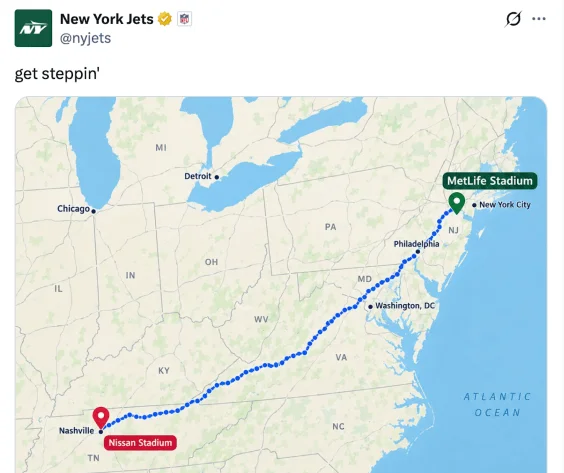
Interestingly, the Jets have also found a way to creatively apply AI off the field. A Titans fan, in a tweet that gained traction, challenged the Jets with a lighthearted dare: he would take a long walk from MetLife Stadium to Nissan Stadium should his team lose. The Jets' social media team could have simply offered a standard response. Instead, they opted to elevate the exchange by quote-tweeting this fan with an AI-generated map that humorously misrepresented geographic boundaries, even placing Detroit in Canada. This playful approach not only showcased AI in a whimsical context but also opened avenues for fan engagement and connection.
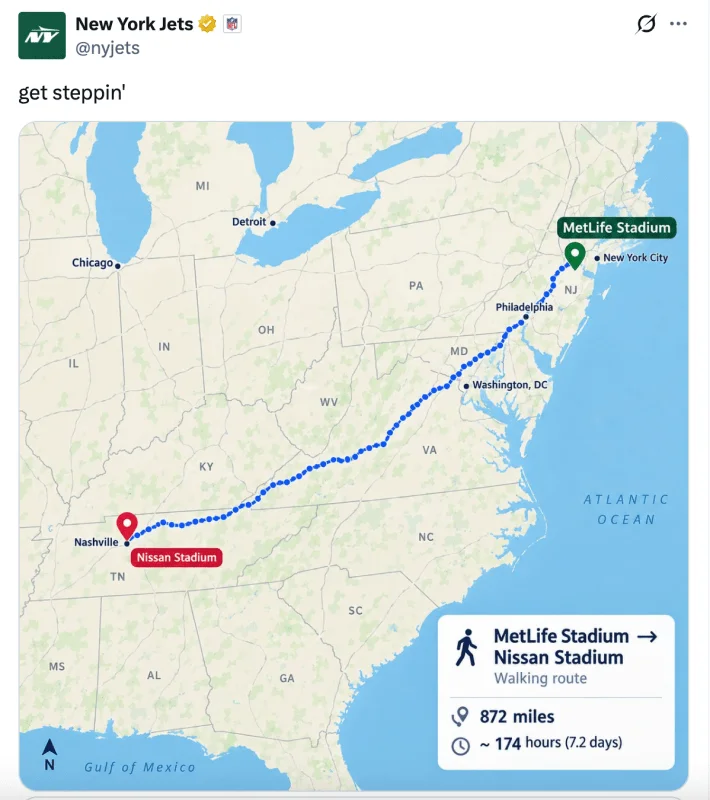
Any fan interaction like this can have real implications. Engaging humorously with fans tends to build loyalty and create a deeper connection to the team. In an era where social media presence often sways public opinion, the Jets’ bold choice to integrate AI into their branding via social media could generate a significant following. And this is the part most people overlook: AI can serve as a bridge between the organization and its supporters, not just a technical tool used behind the curtain.
The Fan Experience and Broader Implications
What does this mean for you, the football fan? The more teams like the Jets invest in AI, the more you'll likely see these technologies reflected in your gameday experience. Hypothetical applications could include real-time analytics displayed on-screen, personalized content based on your past preferences, and even more interactive fan experiences both inside and outside the stadium. Enhanced insights into game strategies, player health, and performance metrics could make the game feel more immersive than ever.
Yet, the approach isn’t without its skeptics. Some question whether this tech-driven focus may overshadow the human elements of the game—team chemistry, player instincts, and spontaneous decisions that often make football so thrilling. There’s always the risk of overly relying on data, potentially leading to analysis paralysis. Decision-makers need to balance the promptness of AI insights with traditional coaching instincts, ensuring that data enhances rather than dominates the game.
The Future Outlook: Challenges and Opportunities
Without a doubt, the potential for AI in the NFL remains deeply intertwined with its evolving accessibility and the frameworks established by team management. The innovation race isn’t limited to the Jets but permeates the league at large. Each team’s willingness to adopt and adapt to AI technologies will likely dictate their competitive edge. So, while the Jets may currently be pushing an "AI-first" philosophy, teams that follow suit must be prepared to overcome obstacles related to integration, data privacy, and player performance metrics.
As AI continues to weave deeper into the sports fabric, the challenge will consist of assessing not just metrics but also player experience, creating a holistic environment where technology and human performance coexist. This isn’t just about winning games—it's about evolving the sport itself. The implications could set new standards for how teams interact with fans, how they train players, and ultimately how games are played.
So, keep an eye on the Jets, and indeed the league as a whole. These developments in AI could redefine what it means to be not just a team but a community. You won't want to miss what happens next.
Discussion
Sign in to join the discussion.