Paul Skenes and Jacob Misiorowski weigh in on whether baseball broadcasters can influence no-hitter outcomes, showcasing differing opinions.
Do Broadcasters Influence No-Hitter Outcomes?
The discussion around whether baseball broadcasters possess a certain "jinx" power over no-hit attempts is a hot topic among fans and players alike. This concept, often referred to as "jinxing," hinges on a peculiar superstition that once a broadcaster mentions a no-hitter, the pitcher is somehow doomed to fail in maintaining it. Many enthusiasts have noticed a trend: announcers' remarks or hints about no-hitters seem to precede their downfall, prompting players to express irritation with such commentary. This phenomenon speaks volumes about the psychology of sport, where superstitions can carry as much weight as strategy or skill.
Every baseball fan knows that baseball is as much a mental game as it is a physical one. Throughout the history of the sport, players and fans alike have clung to various superstitions, from lucky socks to avoidance of certain words. But the jinx surrounding no-hitters stands out for its peculiar intersection of on-field performance and media presence. The superstitions often gain traction from memorable moments or players’ feedback. It almost becomes a self-fulfilling prophecy: a broadcaster mentions a no-hitter, and suddenly everything shifts. Players will often insist they prefer not to hear this kind of commentary—a testament to how deeply ingrained these beliefs are within the culture of baseball.
In a notable moment, Mike Gansey, the new president of the Philadelphia 76ers, felt compelled to issue a video apology to Philadelphia Phillies pitcher Jesús Luzardo. After being linked to Luzardo's faltering no-hit bid during an NBC Sports Philadelphia broadcast, Gansey’s humorous admission captured the light-hearted frustrations of baseball fans. Apologizing for his part in Luzardo’s failure to preserve his no-hitter, Gansey highlights how interconnected the various roles within sports can be, even extending into realms outside of the immediate game—such as front-office executives feeling the heat from superstition.
Insights from Young Pitching Stars
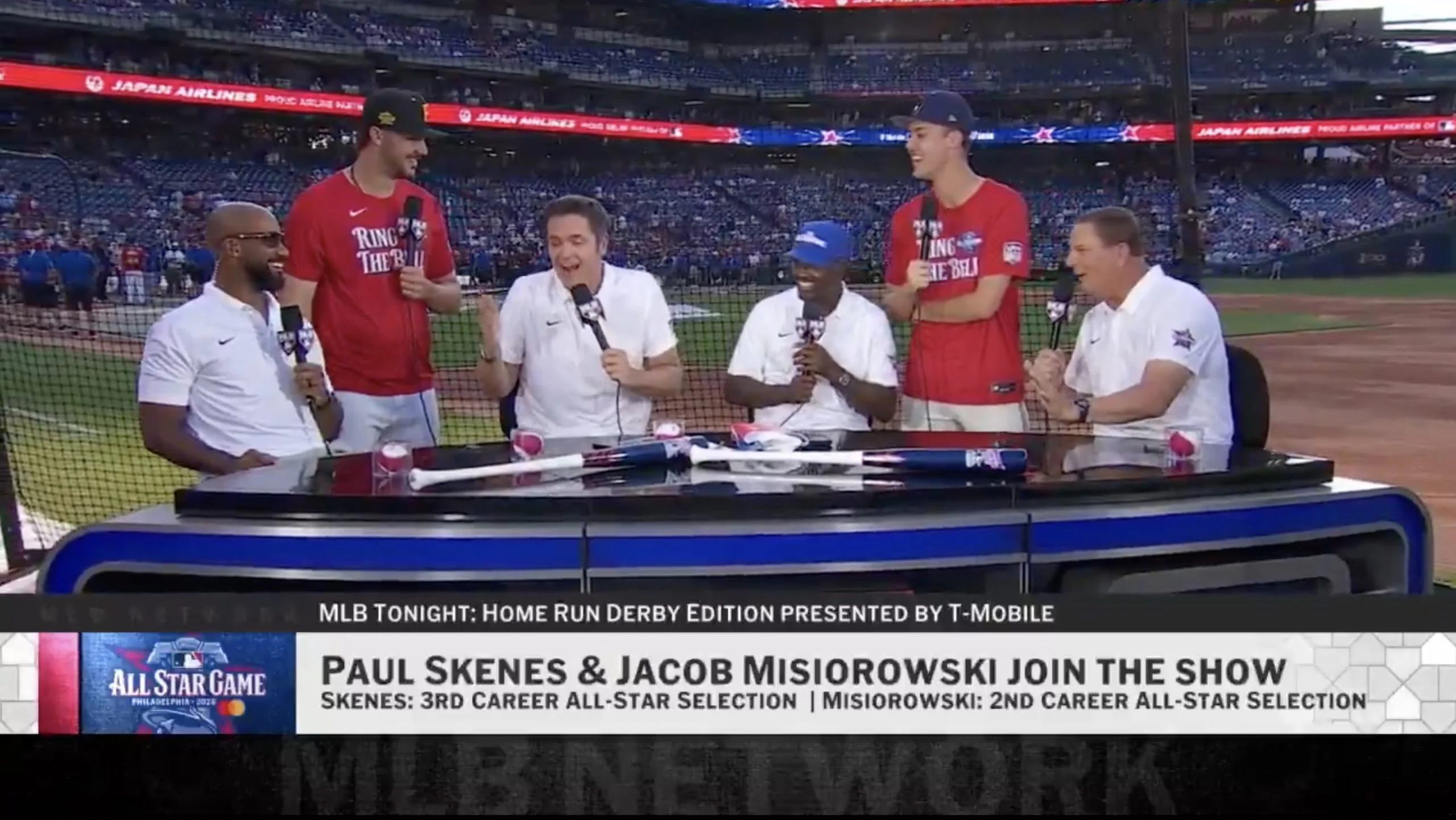
MLB Network’s Greg Amsinger recently posed the perennial question surrounding this phenomenon to two pitchers known for their potential no-hitter capabilities: Paul Skenes and Jacob Misiorowski. Skenes, who captured the National League Young Cy Young Award in 2025 with an impressive 1.97 ERA, shared his thoughts first.
“No,” Skenes stated firmly when asked about the jinx theory. His decisive answer hints at skepticism toward the idea that broadcasters have any tangible effect on a pitcher's performance under pressure. It's a refreshing viewpoint in an arena where players often play into superstitions, either to psych themselves up or to humor fans. Skenes’s performance history speaks highly of his focus and control—evidently, he believes that skill rather than commentary dictates outcomes.
However, when Amsinger nudged the question further, Misiorowski, boasting a league-leading 1.62 ERA this season and a fastball that averages over 100 mph, chimed in with a contrary stance. “Yes,” he replied, nodding enthusiastically. “I think it’s anyone and everyone. Don’t say it. Don’t say it.” His passionate response reveals that for some athletes, the belief in the jinx isn’t just trivial banter; it’s an emotional hedge against failure. Players like Misiorowski seem to carry the weight of belief on their shoulders, perhaps feeling that anything said could interfere with their focus and the energy on the mound.
Paul Skenes and Jacob Misiorowski answer the age-old question of whether a broadcaster can jinx a no-hitter: pic.twitter.com/Y1ntLehLtW
— Awful Announcing (@awfulannouncing) July 15, 2026
A Playful Debate
This lighthearted debate continued as Amsinger quizzed the pair further. “Do I really carry that much power?” he asked, teasing about his role in the broadcasts. Skenes jovially dismissed the notion, encouraging Amsinger to feel free to mention any no-hit efforts while in progress. His lighthearted approach suggests a deep-seated confidence—if he believes he's good enough to push through anything, including a jinx, that says a lot about his mental fortitude. Misiorowski, however, countered with an emphatic, “Don’t say a word. Don’t say a thing.” His insistence adds a layer of comedic relief to an otherwise intense situation, although it may also echo a more serious sentiment shared among many players.
The dynamic makes for a fun time on the airwaves, and as the season progresses, both broadcasters and players should remain vigilant. Misiorowski's strong belief in the jinx could lead to some playful exchanges whenever he’s on the mound facing the scrutiny of live commentary. Fans may find it amusing, but for players, this tension mixes superstition with performance pressure.
Implications and Future Outlook
The implications of such dialogues extend beyond mere superstition. If you're working in this space—whether as a player, analyst, or broadcaster—you may find that how language is used matters. From a broadcasting perspective, how announcers handle discussions on no-hitters can affect viewer engagement and the very fabric of the game. Should they tiptoe around the subject, or is embracing the jinx a way to heighten drama? The decisions made here matter; they can impact the narrative surrounding significant games.
What this means for you, the fan or analyst, is that these unquantifiable factors can influence your expectations and understanding of the game. Even as players show skepticism or belief, the narrative we create around these moments might just be as influential as the players’ skills. Watch closely—if the jinx holds true, we may see analysts modifying their language out of respect for players’ superstitious inclinations. In essence, as the ongoing debate unfolds, the relationship between broadcasters and players will likely continue to evolve, possibly ushering in a new awareness around the care taken in discussing pivotal game situations.
Discussion
Sign in to join the discussion.